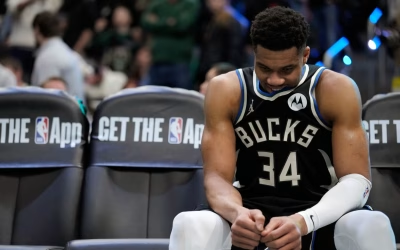
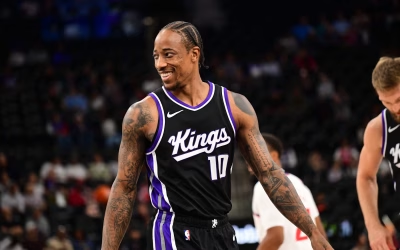
The 2025–26 NBA season has brought the league’s tanking issue into sharper focus than it has been in years. While tanking has long been part of the NBA’s ecosystem, this season feels different because several teams appear to be openly prioritizing draft positioning over winning. The standings show a clear divide between contenders and a cluster of teams near the bottom that seem more invested in lottery odds than late-season pushes. Structural incentives within the league’s system, particularly draft pick protections, are playing a major role in shaping those decisions. Combined with what is widely viewed as an elite upcoming draft class, the incentive to lose has rarely been stronger.
One of the core problems is how protected draft picks function. Teams frequently attach protections such as top-8 or top-10 safeguards when trading future first-round picks. If a team’s pick lands within the protected range, it keeps the selection instead of sending it to another franchise. On paper, this protects rebuilding teams from catastrophic asset loss. In practice, however, it creates an incentive to remain bad long enough to secure and retain high lottery picks, particularly if conveying the pick would otherwise cost them a premium asset. Instead of punishing for losing, the system sometimes cushions it.
The Sacramento Kings are a clear example of how this dynamic can intersect with team direction. After pivoting roster construction in recent years, Sacramento now finds itself near the bottom of the Western Conference standings. Whether intentional or circumstantial, their position puts them squarely in the lottery race during a year when the top of the draft is viewed as potentially franchise-altering. For a team navigating financial constraints and long-term uncertainty, the incentive to secure a top pick rather than chase marginal late-season wins is significant. That reality underscores how even teams that did not begin the year intending to tank can gradually shift focus once the standings solidify.
The Utah Jazz have also drawn attention for their lineup decisions and developmental priorities, which appear aligned with lottery positioning. Utah has been in a multi-year retool, and with draft capital tied up in various protections and obligations, keeping a premium pick can be strategically valuable. When a franchise believes a top selection could anchor its next competitive era, late-season competitiveness becomes secondary. Fans may see experimentation and youth development, but the broader context suggests a calculated positioning at the top of a draft widely considered elite.
The Washington Wizards represent perhaps the most transparent case of a long-term rebuild aligning with tanking incentives. With one of the league’s worst records, Washington is clearly prioritizing youth and draft equity over short-term results. Given their roster composition and competitive timeline, maximizing lottery odds makes organizational sense. Yet when multiple teams across conferences operate under similar logic simultaneously, the league’s competitive balance suffers. Games involving bottom-tier teams often lack urgency, and late-season matchups can feel more like draft auditions than meaningful competition.
What intensifies the issue this year is the perception that the upcoming draft features elite, potentially transformational talent at the top. Front offices around the league view the class as unusually strong, particularly within the top five selections. In a league driven by star power, the possibility of landing a generational cornerstone dramatically outweighs the benefit of finishing with 32 wins instead of 26. When that kind of talent is available, the math becomes clear for struggling franchises: the reward for losing is enormous. That belief amplifies tanking behaviors, especially once playoff hopes fade.
The NBA has attempted to flatten lottery odds in recent years to reduce the advantage of finishing with the worst record. However, the combination of protected picks, asset management strategies, and the allure of elite prospects continues to distort incentives. As long as losing can be framed as a strategic investment rather than a failure, teams will exploit that logic. The Kings, Jazz, and Wizards may be operating within the rules, but the broader pattern reveals a structural problem. If the league wants to preserve competitive integrity deep into the season, it may need to reconsider how draft protections and lottery incentives interact, particularly in years when the top-end talent is too good to ignore.