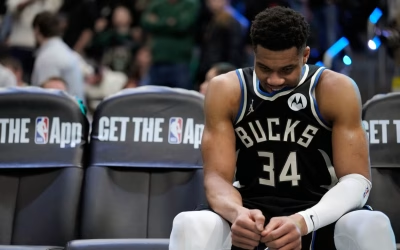
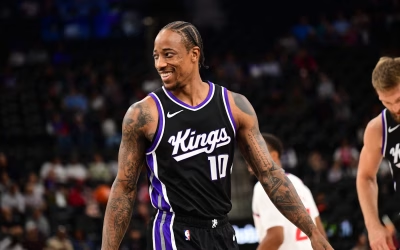
All-Star Weekend was once a celebration of everything that makes the NBA great: elite talent, creativity, competition, and personality. Fans tuned in not just to see their favorite players, but to watch them compete with pride and intensity outside the regular season grind. The event used to feel special, almost sacred, as legends were made under bright lights in mid-February. Today, however, the excitement has noticeably faded. What was once must-see television has, at times, become a punchline. If the NBA wants to protect its brand and honor its fans, it must take serious steps to restore the prestige and competitiveness of All-Star Weekend.
One of the most glaring issues is the decline of the Slam Dunk Contest. The NBA Slam Dunk Contest used to be appointment viewing, delivering iconic moments from players like Michael Jordan, Vince Carter, and Zach LaVine. Their performances combined creativity, athleticism, and genuine competitive fire. In recent years, however, the contest has often lacked star power and originality, with missed dunks, uninspired attempts, and a noticeable absence of the league’s biggest names. When top-tier players decline to participate, it sends a message that the event is not worth their time. Without the league’s brightest stars, the contest struggles to feel meaningful or memorable.

The Three-Point Contest has fared better overall, but even it has experienced moments of diminished intensity. The NBA Three-Point Contest still features elite shooters and can be genuinely thrilling when records are threatened. Yet at times, the energy feels muted, as if it is just another obligation on a busy weekend rather than a battle for bragging rights. While players like Stephen Curry have elevated the event and embraced the spotlight, that level of enthusiasm is not always consistent across the field. The league cannot rely on a single superstar to carry an entire competition year after year. To keep fans engaged, the NBA must find ways to increase stakes, pride, and incentives for every participant.
The All-Star Game itself has perhaps suffered the most. Once a competitive showcase of the league’s best, the game has devolved into a high-scoring exhibition with little defense and minimal effort. Scores routinely soar to video-game levels, and players often appear more concerned with avoiding injury than with winning. While caution is understandable in a long season, the lack of intensity undermines the event’s premise. Fans who dedicate their time to watching expect at least a respectable level of competition, not a glorified shootaround.
Ultimately, the frustration stems from a sense that the players no longer truly care about the event, and that indifference shows on the court. Fans invest emotionally and financially in the league, buying tickets, merchandise, and subscriptions to support the game. In return, they deserve an All-Star Weekend that feels meaningful rather than obligatory. The NBA must consider structural changes, whether through financial incentives, charitable stakes, revised formats, or even international pride, to reignite genuine competition. If the league fails to act, All-Star Weekend risks becoming increasingly irrelevant. But with thoughtful reform and a
renewed emphasis on pride and performance, the NBA can once again transform the weekend into the celebration of basketball excellence that it was always meant to be.